Stakeholders urge swift passage of health financing bills as donor funding declines
By Ojoma Akor
ABUJA — Stakeholders in Nigeria’s health sector have called for the swift passage and implementation of two proposed health financing bills to increase domestic resources for healthcare and strengthen the country’s capacity to finance primary healthcare and disease prevention.
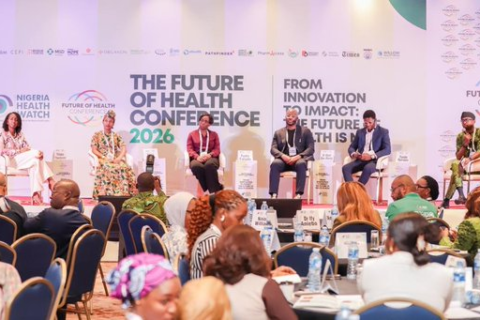
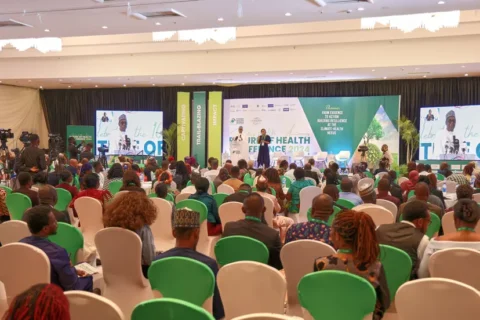
The call was made at a national convergence on sustainable health financing in Abuja. The Senate Committee on Health organized it in collaboration with the Caywood Brown Foundation. The dialogue brought together government officials, lawmakers, civil society organizations and health-sector stakeholders to examine pathways to reducing Nigeria’s dependence on donor funding.
The two bills — one seeking to increase the statutory allocation to the Basic Health Care Provision Fund (BHCPF) from one to two per cent of the Consolidated Revenue Fund, and another seeking to reform the excise duty on sugar-sweetened beverages and earmark part of the proceeds for health — have already passed third reading in the Senate and are before the House of Representatives for concurrence.

Chairman of the Senate Committee on Health, Senator Ipalibo Harry Banigo, said the bills are important parts of a broader effort to establish a more predictable, domestically financed health system.
She said health financing should be regarded as a national development issue because poor health affects education, productivity and household welfare.
She explained that the proposed BHCPF amendment would increase the statutory allocation from one to two per cent. At the same time, the sugar-sweetened beverage measure would replace the existing flat excise duty with a percentage-based levy and allocate a significant proportion of the proceeds to health promotion and disease prevention.
According to her, the two measures complement each other, with one strengthening primary healthcare financing and the other creating an additional revenue stream for prevention and health promotion.
Banigo said the Senate had completed its part of the legislative process by passing both bills through third reading and called for the House of Representatives to consider them.
She said the convergence was intended to align evidence, political commitment and action around the proposed legislation.
Pate: Nigeria must take greater responsibility for health financing
The Coordinating Minister of Health and Social Welfare, Prof. Muhammad Ali Pate, said Nigeria’s longstanding dependence on international health financing was becoming increasingly difficult to sustain as donor resources decline.
Pate acknowledged the significant contributions of bilateral, multilateral and philanthropic partners to programs including immunization, HIV, malaria and other health interventions.
However, he said changing global priorities meant Nigeria needed to progressively assume greater responsibility for financing its health system.
“The path out of that dependency that we have enjoyed over the last several decades is to put domestic resources — federal, states, local government — to invest in health,” he said.
The minister said the challenge was not simply the amount of money available for healthcare but also how efficiently available resources were allocated and spent.
He said increasing health financing would have limited impact if resources were wasted, duplicated across programs or invested in areas without corresponding health outcomes.

Pate therefore called for greater allocative efficiency, strategic purchasing and stronger coordination across the health system.
He used primary healthcare as an example, saying that treating relatively simple conditions at teaching hospitals could cost more than providing appropriate care at primary healthcare facilities.
“When you treat at the primary healthcare, when we force the states to invest in primary healthcare, we are improving the allocative efficiency of the total spend in health,” he said.
Pate also called on civil society organizations and other stakeholders to take the advocacy for sustainable health financing beyond Abuja and engage state governments and legislatures.
He said the federal government had written to the 36 state governors requesting counterpart funding for the BHCPF, noting that only a small number of states had met their counterpart-funding obligations in recent years.
The minister urged state legislatures to domesticate relevant health financing laws so that the reforms could operate across Nigeria’s federal system.
He said sustainable health financing would require ownership at federal, state and local government levels rather than dependence on a single administration or funding source.
Presidential adviser backs increased domestic financing.
The Special Adviser to the President on Health, Dr Salma Anas-Ibrahim, also called for stronger domestic investment and continuity in the country’s health reforms.
She said recent reforms had contributed to increased use of primary healthcare services and expanded resources available for health programs.
Anas-Ibrahim urged state Houses of Assembly to increase health allocations and domesticate relevant national measures, arguing that federal financing alone would not be sufficient to address the country’s health needs.

She also stressed the importance of continuity in health reforms, noting that previous legislative efforts had sometimes failed to conclude extensive work by stakeholders.
The House of Representatives committee leadership, represented at the event by Dr Amos Magaji, also acknowledged the proposed measures’ potential to strengthen primary healthcare financing and address the growing burden of non-communicable diseases.
According to the presentation, sugar-sweetened beverage consumption in Nigeria increased substantially between 2003 and 2022, while available evidence indicates a high prevalence of hypertension among Nigerian adults.
The representative stressed that the legislation’s effectiveness would ultimately depend on transparency, accountability, and measurable improvements in health outcomes.
Civil society calls for action beyond legislation.
The Executive Director of the Caywood Brown Foundation, Ibim Banigo, said the convergence was convened to move the discussion from legislation to implementation.
She said Nigeria’s ambition to achieve universal health coverage could not be realized without adequate, predictable, sustainable financing that is increasingly domestically sourced.
“The opportunity before Nigeria here is more than just two bills,” she said.
According to her, the proposed BHCPF increase could strengthen the primary healthcare delivery platform, while the sugar-sweetened beverage levy could fund prevention and health promotion.
She called for clear responsibilities and timelines among the legislature, executive, technical agencies, civil society, professional organizations and communities.
NHIA: Pooling resources can protect households from health-related poverty
The Director-General of the National Health Insurance Authority (NHIA), Dr Kelechi Ohiri, said expanding pooled and predictable domestic financing was essential to protecting Nigerians from health-related financial hardship.
He noted that much of Nigeria’s healthcare spending remained out-of-pocket, leaving households vulnerable when they experience serious or prolonged illness.
“Pooled, predictable domestic revenue, which is rooted in mandatory health insurance and primary healthcare, is still the single biggest lever we have to protect Nigerians from health-driven poverty,” Ohiri said.
He said the NHIA has been implementing reforms to expand access to pooled funds and protect vulnerable groups, including women and newborns.
Ohiri urged legislators, civil society organizations and the media to support the legislative process, particularly the passage and eventual implementation of the two health financing measures.