NCDs: Stakeholders urge swift passage of sugar-sweetened beverage levy bill
By Ojoma Akor
ABUJA — Health experts, lawmakers and civil society organizations have called for the speedy passage of Nigeria’s proposed sugar-sweetened beverage (SSB) tax reform bill.
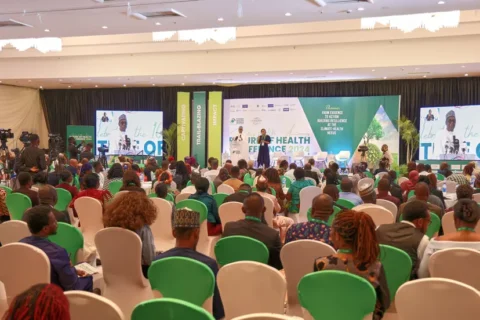
They made the call at a national convergence on sustainable health financing in Abuja. The Senate Committee on Health organized it in collaboration with the Caywood Brown Foundation, with support from the Global Health Advocacy Incubator (GHAI), Legislative Initiative for Social Development (LISDEL), and other partners. The stakeholders examined the proposed SSB levy alongside a bill seeking to increase funding for primary healthcare.
The stakeholders also said passage of the proposed SSB levy bill will help curb the growing burden of non-communicable diseases (NCDs) while generating additional domestic resources for prevention and health promotion.
The proposed SSB legislation seeks to replace the existing flat excise duty of N10 per liter on sugar-sweetened beverages with a percentage-based levy and earmark a significant proportion of the proceeds for health promotion and disease prevention.
Stakeholders said the measure could provide Nigeria with a dual public-health and financing benefit: discouraging excessive consumption of sugary drinks while generating predictable domestic resources to address diseases such as hypertension, diabetes and other NCDs.

Rising sugary drink consumption raises concern
The Chairman of the House of Representatives Committee on Healthcare Services, Dr Amos Magaji, said evidence presented at the convergence showed that consumption of sugar-sweetened beverages in Nigeria increased by 123 percent between 2003 and 2022.
He said the trend was particularly concerning against the country’s growing burden of NCDs.
Magaji also cited evidence indicating that approximately one in three Nigerian adults has hypertension, while a 2023 systematic review estimated hypertension prevalence at 34.2 percent.
He said the proposed SSB levy therefore offered an opportunity to pursue two complementary objectives: improving public health by discouraging excessive consumption of sugar-sweetened beverages and mobilizing additional domestic resources for healthcare.
“The important consideration is not simply how much revenue can be generated, but how such a measure can contribute to healthier choices and sustainable healthcare,” he said.
‘This is about more than raising revenue’
Prof. Emmanuel Alhassan, a Professor of Psychology at Nasarawa State University and Country Lead for Health System Strengthening at the GHAI, said the SSB levy was particularly important for addressing NCDs.
He urged the House of Representatives to concur with the bill quickly and called on relevant government institutions to support its passage and implementation.
According to Alhassan, directing part of the proceeds towards NCD prevention could provide a more sustainable financing stream for interventions aimed at reducing the health burden associated with unhealthy diets and consumption patterns.

Pate: Health spending must deliver outcomes
The Coordinating Minister of Health and Social Welfare, Prof. Muhammad Ali Pate, said the debate over additional health financing should focus not only on how much money is available but also on how effectively it is spent.
Pate said Nigeria had historically underinvested in healthcare, while households continued to bear a significant share of health expenditure through out-of-pocket payments.
He said Nigeria must therefore allocate additional domestic resources strategically to interventions that can produce measurable health outcomes.
The minister also stressed the importance of prevention, adding that Nigeria could not afford to continue spending predominantly on treating conditions that could have been prevented or detected earlier.
He said the government was working to improve allocative efficiency, strategic purchasing and accountability within the health system.
Bill awaits House concurrence
The proposed SSB levy bill has already passed third reading in the Senate and is before the House of Representatives for concurrence.
Senator Ipalibo Harry Banigo, Chairman of the Senate Committee on Health, urged stakeholders to maintain pressure to complete the legislative process.
She said the bill, along with the proposed increase in the Basic Health Care Provision Fund from one to two per cent of the Consolidated Revenue Fund, could help create a more resilient, domestically financed health system.
Banigo said domestic financing must progressively become the foundation of Nigeria’s health financing framework, particularly as international donor funding becomes less predictable.
SSB levy could strengthen prevention
The Executive Director of the Caywood Brown Foundation, Ms Ibim Banigo, said the SSB levy should be viewed as part of a broader health-financing architecture, not simply another tax measure.
She said Nigeria faces a dual challenge: strengthening primary healthcare while confronting the increasing burden of NCDs and other preventable conditions that impose high financial costs on individuals, families, communities and government.
“Both legislative initiatives are not mutually exclusive. They are actually two sides of the same health financing equation,” she said.
Banigo explained that while the proposed increase in the Basic Health Care Provision Fund would strengthen the primary healthcare delivery platform, the SSB levy could strengthen financing for prevention and health promotion.
She said the combination could help Nigeria build a health financing system increasingly anchored in domestic resources.
Civil society: NCD prevention must reach communities
Damilola Ademuyiwa, Director of Programs at LISDEL, said the proposed SSB levy could help address the growing NCD burden by providing resources for diagnosis, treatment, commodities and health promotion.
He said part of the proceeds should support information and awareness activities at community level so that Nigerians understand the risks associated with NCDs and know how to prevent and manage them.
“This is where issues around enlightenment, sensitization of local community people and the entire population become important, he said.