AHFID to host AI in Health Summit in Abuja

By Ojoma Akor
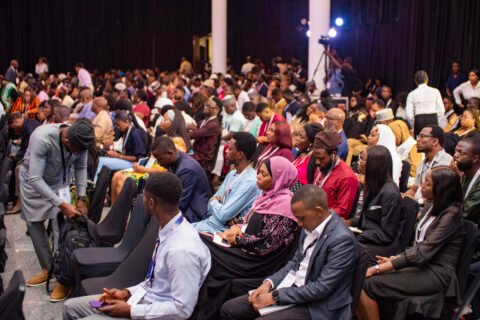
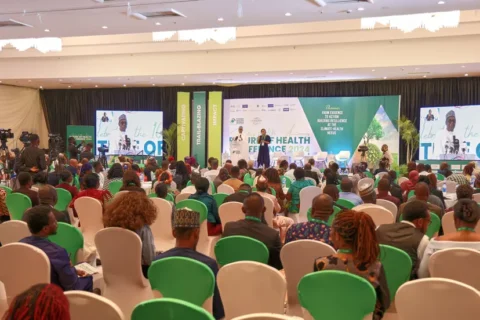
The Africa Hub for Innovation & Development (AHFID) will soon convene an Artificial Intelligence (AI) in Health Summit in Abuja, Nigeria.
AHFID Founder and Chief Executive Officer Dr Kunle Kakanfo disclosed this while briefing reporters ahead of the summit, slated for the 19th and 20th of this month.
Kakanfo described the event as the first of its kind in sub-Saharan Africa, saying it would shift the conversation on AI in healthcare from hype to practical applications that can improve health outcomes.
He said the summit will bring together health, technology, regulatory, and development stakeholders to chart a national pathway for the safe and responsible use of AI in Nigeria’s health sector.
He said the summit was being organized against the backdrop of persistent challenges facing Nigeria’s health system, including shortages of healthcare workers, high out-of-pocket expenditure, and the burden of diseases such as tuberculosis.
According to him, Nigeria needs to explore how AI can strengthen the health system while ensuring its deployment is guided by evidence, patient safety, ethical principles, and appropriate regulation.
“Every claim that we’ve made and every claim that is being made about artificial intelligence has also to be measured not just based on the hype of artificial intelligence, but also based on: is it able to move our indices forward, and is it able to improve health outcomes for the people,” Kakanfo said.
He said the summit would examine practical applications of AI, including computer-aided detection of tuberculosis through chest X-rays, clinical decision-support tools, cervical cancer screening, health insurance claims processing, disease surveillance and healthcare documentation.
Kakanfo highlighted, however, that AI should augment, not replace, healthcare professionals.
“A tool that reads an X-ray does not staff the hospital,” he said, emphasizing that human oversight would remain essential when using AI for clinical care.
He said AI could still help address workforce gaps by making healthcare delivery faster and more efficient, allowing health professionals to spend more time with patients needing complex care.
The summit is also expected to showcase AI innovations selected from submissions received following a call for AI innovations.
Kakanfo said the showcase would bring innovators together with policymakers and regulators to ensure that technological development is accompanied by appropriate governance and regulatory pathways.
The summit will also address the procurement of AI tools, particularly the risks associated with importing models trained predominantly on foreign datasets.
Other areas expected to feature include data sovereignty, federated learning, synthetic data, AI validation and evaluation, regulatory pathways and responsible procurement.
He said the Federal Capital Territory Administration (FCTA), the National Agency for Food and Drug Administration and Control (NAFDAC), the Nigeria Center for Disease Control and Prevention (NCDC), the National Information Technology Development Agency (NITDA), the National Center for Artificial Intelligence and Robotics and other stakeholders would participate.
Kakanfo said the objective was not simply to hold another conference, but to use the summit to generate concrete commitments and trigger the development of a national roadmap for AI in health.
“This will not just be a conversation,” he said. “It is going to be a trigger for a national-level roadmap, a trigger for policy reflections and policy updates in terms of artificial intelligence and health.”
AI must be domesticated for healthcare — NCDC
Senior Technical Adviser to the Director-General of the NCDC, Dr Abiola Oshunniyi, said Nigeria must move quickly to domesticate AI for the health sector rather than wait for other countries to take the lead.
Oshunniyi said Nigeria already had significant AI activity outside healthcare, but needed to translate the available expertise, infrastructure and innovation into solutions tailored to the country’s health challenges.
He said summit discussions could feed into the National Council on Health and ongoing legislative efforts around e-health.
“How do we bring memos to the National Council on Health as an output of this conference that can then become a national resolution and create a national roadmap?” he asked.
Oshunniyi also called for stronger pathways through which locally developed health technologies could be validated, adopted and scaled by government.
He said Nigeria should be able to develop solutions locally that meet international standards and could eventually be exported to other African countries.
Technology Law Counsel and AI in Health Summit Coordinator Liss Yori said patient safety must remain at the center of AI deployment.
She said the summit would help ensure that AI tools developed for healthcare do not compromise patients’ privacy, dignity, or safety.