Nigeria’s 2027 Elections: UHC Forum Urges Political Parties to Commit to Universal Health Coverage

By Ojoma Akor
ABUJA — The Nigeria UHC Forum has urged political parties and candidates contesting the 2027 general elections to make universal health coverage (UHC) a central campaign issue, with clear commitments to increased health financing, expanded health insurance, and stronger primary healthcare services.
The Forum said the elections offer an opportunity to translate existing health policies and agreements into measurable actions that would guarantee Nigerians access to quality, affordable healthcare without financial hardship.
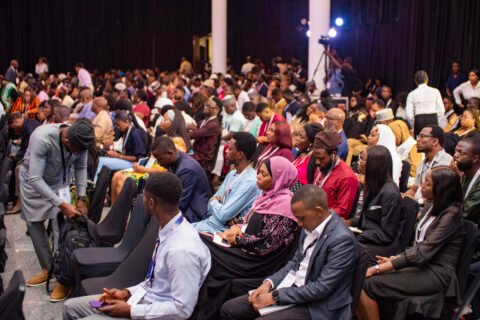
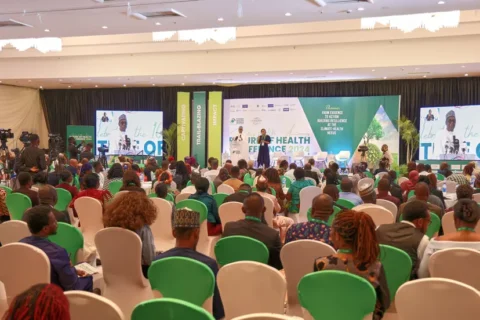
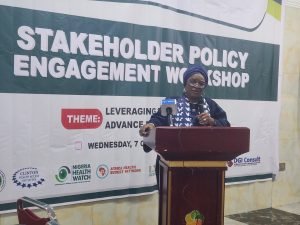
The call was made at a Stakeholder Policy Engagement Workshop organized by the Nigeria UHC Forum in Abuja, with the theme, “Leveraging 2027 Election to Advance Nigeria’s UHC Quest.”
Speaking at the workshop, the Forum’s Co-Convener, Chief Moji Makanjuola, said the 2023 elections showed the importance of political engagement in advancing health reforms, and the need for more sustained advocacy before and after the next elections.
Makanjuola recalled that the Forum had engaged political actors ahead of the 2023 elections through its Citizens-Led Health Agenda, which sought to place health at the center of political discussions and influence government priorities.
She said the engagement contributed to the inclusion of health priorities in the ruling party’s manifesto, presentations of policy demands to President Bola Tinubu, and subsequent dialogue with the administration on health sector priorities.
The Forum was also recognized in January 2024 as a partner in implementing the Nigeria Health Sector Renewal Investment Initiative Compact, she added.
However, Makanjuola said that the Forum’s engagement before the 2023 elections was concentrated in only two states and that the momentum was not sustained sufficiently after the polls.
“That is the lesson we carry into 2027,” she said, urging stakeholders to develop a more comprehensive strategy that would cover the entire electoral cycle.
She said the workshop was designed to review the Citizens-Led Health Agenda, agree on priority demands for political actors, examine health sector challenges at the state level and develop a civil society roadmap for engagement before, during and after the elections.
She said Nigeria already had important foundations for achieving UHC, including the National Health Act, the National Health Insurance Authority Act, the Basic Health Care Provision Fund, state social health insurance agencies and the Health Sector Renewal Investment Initiative.
She further said that many Nigerians still paid for healthcare out of pocket, while access to services and the quality of healthcare delivery remained uneven across states.
“The 2027 elections present us with a significant opportunity. Let us seize that opportunity to ensure that Universal Health Coverage becomes not just a development aspiration, but a political commitment and a measurable priority for Nigeria,” she added.
‘Existing health commitments need implementation’
Also speaking, the Chairman of the Health Sector Reform Coalition, Dr Muhammad Lecky, urged political parties, candidates and government institutions to build on existing health sector commitments rather than introduce new promises that might not be implemented.
He said Nigeria had already signed several health sector agreements and compacts at national and subnational levels, making implementation and enforcement the immediate priorities.
Lecky called for increased health financing, stronger primary healthcare systems and expanded health insurance coverage, stressing that the National Health Insurance Authority Act provided an important framework for advancing universal coverage.
He said, however, that enforcement mechanisms were needed to ensure the law achieved its objectives.
He said the Health Sector Reform Coalition remained committed to working with stakeholders to make the 2027 elections a catalyst for faster progress towards universal health coverage.
The Forum’s Co-Convener and chief executive officer of the Development Governance International (DGI) Consult, Dr Gafar Alawode, said states should prioritize coverage for poor and vulnerable people while ensuring allocated health funds are used effectively.
According to him, some states have achieved between 80 and 90 percent execution of their health budgets, while others have struggled to translate budgetary allocations into services.
Dr Alawode also urged political parties to include specific health commitments in their manifestos to ensure that campaign promises translate into government plans and budgetary action after the elections.
He said that prioritizing health taxes is an additional source of funding for universal health coverage.
He highlighted that the Forum was reviewing changes in Nigeria’s fiscal, policy, and health landscape since the 2023 elections to identify priority interventions for the next electoral cycle.
The proposed roadmap, he said, would guide engagement with political actors and other stakeholders at national and subnational levels, including after the elections when newly appointed ministers and commissioners establish their priorities.

APC pledges support for health sector reforms
National Chairman of the All Progressives Congress (APC), Prof. Nentawe Goshwe Yilwatda, who was represented by the party’s Deputy National Organizing Secretary, Barrister Emeka Okafor, said healthcare should be treated as a core governance and national development priority, not merely a campaign promise.
Yilwatda said achieving UHC required sustained investment in health financing, expanded health insurance coverage, a motivated and adequately supported health workforce, improved access to essential medicines and stronger health systems, particularly for women, children and vulnerable communities.
He called for a framework to define political commitments, track implementation and measure progress before, during and after elections.
“Our focus should therefore extend beyond the coming elections. We should use this opportunity to establish a framework through which priorities are clearly defined, political commitments are tracked, and progress is consistently measured before, during and after each election,” he said.
Yilwatda said the 2027 elections could help strengthen Nigeria’s healthcare system and renew the social contract between government and citizens.
He also expressed the APC’s readiness to partner with the Nigeria UHC Forum and other stakeholders to advance universal health coverage.
Private sector offers support for universal coverage
The Vice President of the Healthcare Federation of Nigeria, Dr Ayodele Cole Benson, said private healthcare providers could help expand access to services, particularly in communities where public primary healthcare centers were not functional.
He said the private sector already provides more than 60 percent of healthcare services to Nigerians and could contribute further through service provision, supply chains, monitoring, and evaluation.
According to him, private healthcare providers could complement government efforts to strengthen the Basic Health Care Provision Fund platform and improve access to essential services.
Benson said greater collaboration between the government, private sector and civil society would be necessary to achieve UHC.
Stakeholders seek increased health financing.
President of the Association of Nigeria Health Journalists (ANHEJ) Joseph Kadiri called for an increase in the one per cent Consolidated Revenue Fund allocated to key health interventions under the National Health Act to two per cent.
He said improved public financing was essential to reducing out-of-pocket healthcare expenditure, which continues to prevent many Nigerians from accessing needed services.
He recalled the role of health journalists in advocating for the National Health Act and implementing its health financing provisions, pledging continued media engagement to promote improved funding for the sector.
Similarly, Prof. Ahmed Aliko, Senior Adviser and Special Regional Representative of the Director-General of the Africa Centers for Disease Control and Prevention (Africa CDC), said strong political will and leadership were critical to achieving UHC.
He cited the establishment of the United Kingdom’s National Health Service in 1945 and Thailand’s adoption of universal health coverage in 2002, following the Asian financial crisis, as examples of major health reforms pursued during challenging periods.
Aliko said Nigeria could use its current fiscal and health system challenges, alongside the political environment ahead of 2027, as an opportunity to accelerate reforms.
UHC must address emerging health threats
The Sector Lead for Health at GIZ and chair of the Health Development Partners Group, Dr Fatima Zanna, said UHC requires more than expanding access to healthcare services; it also demands resilient health systems that can respond to disease outbreaks, antimicrobial resistance, climate change, non-communicable diseases, and future emergencies.
“UHC cannot be delivered by government alone, or by development partners alone. It has to be a Nigeria-owned and -led journey,” she said.