Nigeria’s Health Insurance Coverage Records 42% Rise to 23m

By Ojoma Akor
The number of Nigerians covered by health insurance has increased by 42 percent, from approximately 16 million in January 2024 to 23.02 million, the Director-General of the National Health Insurance Authority (NHIA), Dr Kelechi Ohiri, has said.
Ohiri disclosed this at a quarterly media briefing on the implementation of the Nigeria Health Sector Renewal Investment Initiative, where he highlighted ongoing efforts to expand health insurance coverage and improve access to affordable healthcare.
He said at least 3.18 million of those enrolled in health insurance were poor and vulnerable Nigerians whose premiums were paid through the Basic Health Care Provision Fund (BHCPF).
According to him, the NHIA is working to increase enrolment, improve public awareness and rebuild confidence in health insurance, particularly by ensuring that enrollees receive the benefits for which they are covered.
Ohiri expressed concern over instances where patients pay out of pocket for services already included in their health insurance benefit packages, stressing the need to address such practices to strengthen public trust in the system.
He called for greater collaboration among government agencies to expand coverage and improve compliance with the National Health Insurance Authority Act 2022, which makes health insurance mandatory for Nigerian residents.
The NHIA chief also urged the media and civil society organizations to support public education campaigns that would encourage more Nigerians to enroll in health insurance schemes.
He explained that prepayment through health insurance offers a more cost-effective way to secure financial protection against healthcare expenses than waiting until illness occurs before seeking the resources to pay for treatment.
Meanwhile, the Executive Director and Chief Executive Officer of the National Primary Health Care Development Agency (NPHCDA), Dr Muyi Aina, said additional funding had been approved through the BHCPF to support essential medicines and medical supplies, health security and emergency transportation, among other priorities.
Aina said the government was working to expand the number of healthcare facilities benefiting from the fund while improving resource allocation and utilization to strengthen service delivery.
The BHCPF is a key financing mechanism for improving access to essential healthcare services, particularly for poor and vulnerable populations, by supporting primary healthcare facilities and other designated interventions.
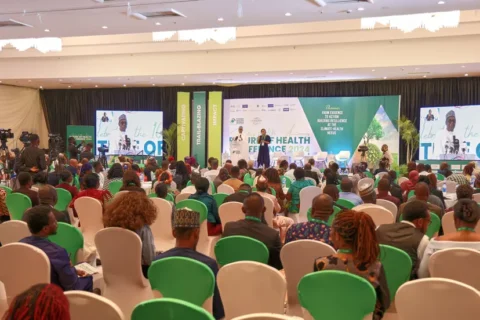
The quarterly media briefing was convened to provide updates on the implementation of the Nigeria Health Sector Renewal Investment Initiative and to strengthen engagement among health agencies, journalists, and civil society organizations.