Nigeria Must Increase Domestic Funding for Family Planning as Donor Support Declines – Experts
By Ojoma Akor
Health and development experts have called on the Federal Government and state governments to increase domestic investment in family planning, strengthen budget accountability and explore innovative financing mechanisms to sustain services amid declining international donor support.
The experts, who spoke at a media roundtable ahead of the 9th Nigeria Family Planning Conference (NFPC), said continued dependence on external assistance could undermine progress in expanding access to modern contraceptives and reproductive health services.
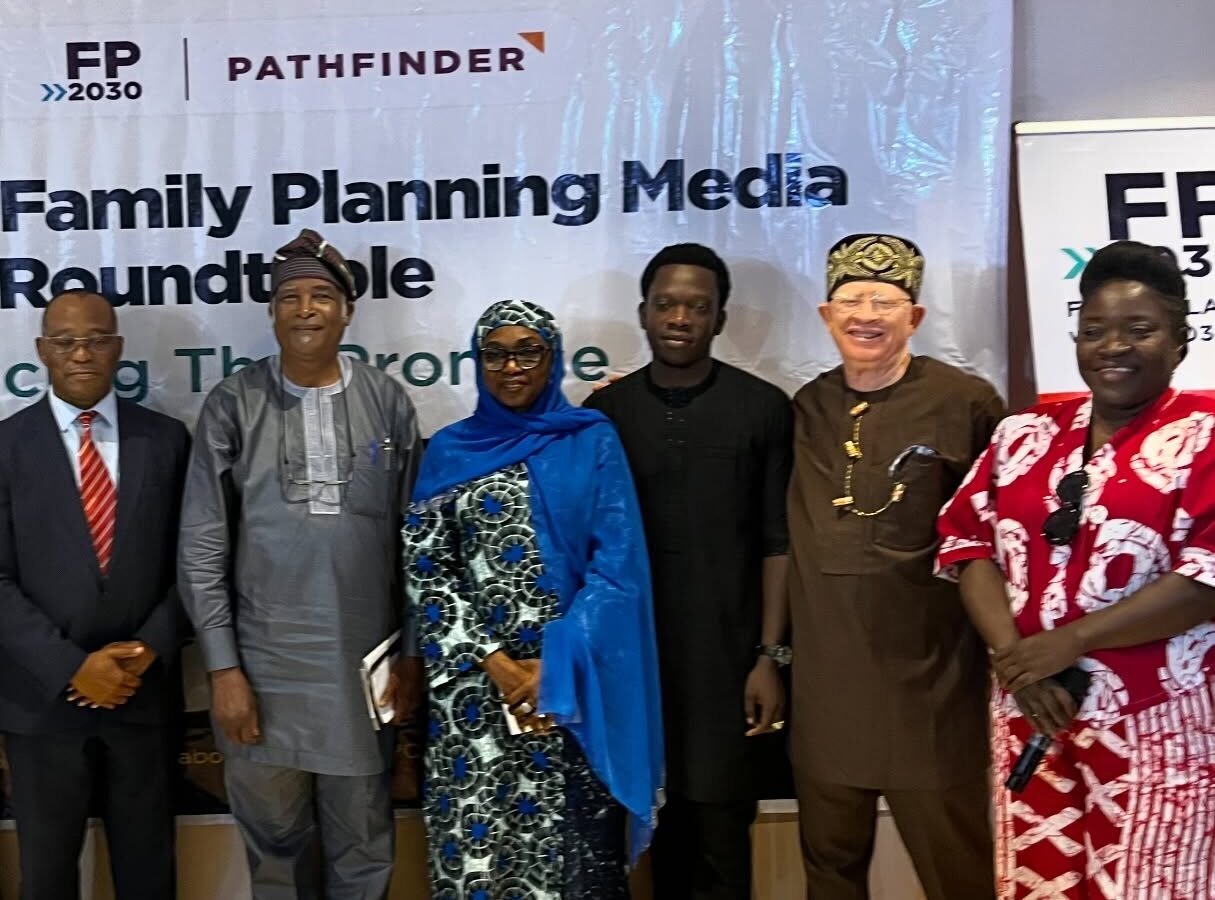
The roundtable, themed “Financing the Promise: Advancing Family Planning Financing, Accountability, and Public Engagement in Nigeria,” brought together family planning advocates, development partners, and journalists to examine financing gaps and the media’s role in holding governments accountable.
Chairman of the Association for the Advancement of Family Planning (AAFP) and Chairman of the conference’s Local Organizing Committee, Dr Ejike Oji, described the changing global funding landscape as an opportunity for African countries to rethink how they finance their health systems.
He said Nigeria and other African countries need to look inwards and mobilize domestic resources to finance essential health services.
Oji urged journalists to make domestic health financing a major focus of their reporting, particularly as Nigeria considers legislative measures that could provide additional resources for healthcare.
He highlighted proposals to increase the Basic Health Care Provision Fund (BHCPF) from one to two per cent of the Consolidated Revenue Fund (CHF) and to raise the tax on sugar-sweetened beverages, noting that such measures could create additional resources for health interventions.
He said that the media must sustain public attention on these developments and ensure that government commitments translate into actual funding and improved access to services.
Oji also called for stronger collaboration among journalists across African countries to promote cross-regional learning on family planning financing and accountability.

Nigeria is falling behind family planning targets
Co-founder of the Association for Reproductive and Family Health (ARFH), Professor Ladipo, warned that Nigeria was falling behind its potential in expanding access to modern contraceptives.
He put Nigeria’s population at an estimated 240 million, with an annual growth rate of about three per cent and a total fertility rate of 4.8 children per woman.
He said modern contraceptive prevalence stood at approximately 18 percent, while unmet need for modern contraception was about 22 percent.
According to him, Nigeria should have achieved a modern contraceptive prevalence rate of about 60 percent if the country had sustained the momentum of earlier family planning interventions.
“By now, we should be at about 60 percent modern contraceptive use if we had followed the trajectory and the momentum of that time,” he said.
Ladipo said that failure to achieve the FP2030 target of 27 percent modern contraceptive use would have serious implications for the country’s development.
He enjoined journalists to use their platforms to influence public attitudes, improve health-seeking behavior and sustain pressure on policymakers.
“If this country fails to meet the FP2030 target of 27 percent modern contraceptive use, you will be responsible. You will be held responsible because you have the instruments and the power of voice to change people’s behavior and health-seeking behavior,” he told journalists.
He also linked rapid population growth to Nigeria’s development challenges, noting that approximately 140 million Nigerians live in multidimensional poverty.
To reduce dependence on foreign assistance, Ladipo proposed innovative financing mechanisms, including an additional $20 charge on international visa applications and $50 on airline tickets, with proceeds dedicated exclusively to productive health interventions, particularly family planning.
He stressed, however, that any funds generated through such mechanisms must be independently managed and protected against diversion.
Experts urge government to strengthen budget accountability
Similarly, Managing Director of FP2030, West and Central Africa, Dr Alain Damiba, called for diversifying family planning funding sources and using available resources more efficiently.
He urged Nigeria to move beyond donor-dependent financing by engaging federal and state governments, health insurance schemes, private-sector actors, and domestic institutions.
Damiba called for dedicated family planning budget lines, increased funding for contraceptive procurement, and stronger last-mile distribution through primary healthcare facilities.
He also identified timely budget releases, transparent procurement processes, improved supply chain management, and regular expenditure tracking as essential measures to reduce contraceptive stock-outs and improve service delivery.
Country Director of Pathfinder International and Regional Portfolio Director for West and Central Africa, Dr Amina Aminu Dorayi, said Nigeria must ensure that existing commitments translate into tangible improvements in access to reproductive health services.
Dorayi noted that although the country had made progress in family planning, the changing development financing landscape presented a significant challenge to sustaining those gains.
She called for increased domestic resource mobilization, innovative financing approaches, and stronger public-private partnerships, noting that Nigeria had yet to harness opportunities within its private sector fully.
She also emphasized the need for accountability at federal, state and local government levels, particularly in tracking family planning budget allocations and releases.
“We sometimes celebrate budget announcements and allocations. But the more important question is: where does the money go once it is released? What has it been spent for?” she asked.
She urged journalists to investigate whether funds allocated for contraceptive commodities actually reach health facilities and whether women and girls receive the services they need.
Dorayi further called for family planning reporting to move beyond awareness creation and become part of broader national conversations on economic development, public financing and accountability.
Young people demand greater participation
The Chairman of the Youth Subcommittee of the 9th Nigeria Family Planning Conference, Idoko Philip, urged media organizations to give young people a stronger voice in family planning reporting and policymaking.
He noted that although young people make up a significant share of Nigeria’s population, their perspectives are often missing from discussions and decisions affecting their reproductive health.
He also said adolescents and young women continue to face barriers to accessing family planning information and services, including cost, stigma, negative provider attitudes, misinformation and limited availability of youth-friendly services.
He urged journalists to make young people the subjects of their stories rather than reducing their experiences to statistics.
He also called on the media to investigate government funding commitments, track budget releases and examine whether contraceptives are consistently available in primary healthcare facilities, particularly at the state level.
He stressed that family planning should be reported beyond the health pages because of its links to education, poverty reduction, women’s economic empowerment and national development.
He said, “The success of family planning in Nigeria will not be measured by the number of people who have attended the conference, nor by the number of media reports that we have. It will be measured by whether a young woman in a rural community can walk into a health facility, receive accurate information, access her preferred contraceptive method without discrimination, and make an informed decision about her future.”