
Environmental Degradation Threatens Nigeria’s Food, National Security – Maigida
By Ojoma Akor
Environmental expert Dr Abba Maigida says that environmental degradation, climate change, and the unsustainable exploitation of natural resources pose growing threats to Nigeria’s food security, livelihoods, and national security.
Maigida called for environmental sustainability to become central to government policies, infrastructure development, and natural resource management, warning that Nigeria’s pursuit of economic growth could be undermined by development practices that neglect environmental protection.
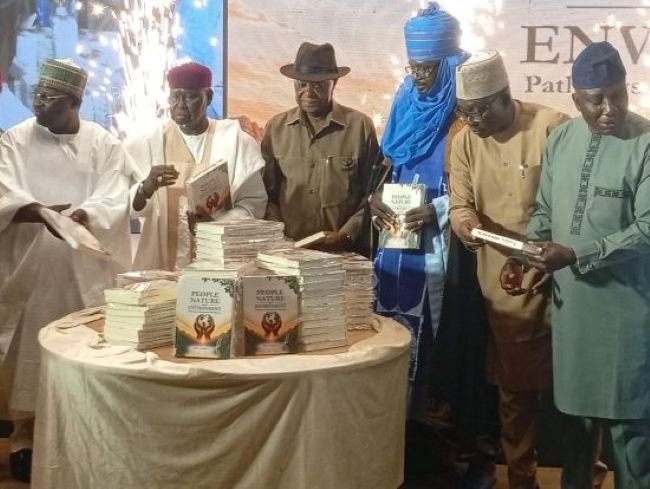
He spoke in Abuja on Thursday at the public presentation of his book, People, Nature and Environment: Pathways to Sustainable Development, where he urged policymakers to adopt development strategies that balance economic advancement with environmental protection and human welfare.
Drawing on more than two decades of experience in public service, Maigida identified erosion, desert encroachment, flooding and unplanned urbanization as major environmental challenges threatening communities across Nigeria.
He recounted witnessing the devastating effects of erosion in eastern Nigeria, where homes, roads and farmlands had been destroyed. At the same time, desert encroachment in the North continued to threaten agricultural production and rural livelihoods.
He also cited recurring floods across the Middle Belt and mounting pressure on housing and infrastructure in rapidly expanding cities such as Abuja and Lagos as evidence of the consequences of inadequate environmental planning.
According to him, these experiences inspired more than seven years of research into how Nigeria could pursue economic development without destroying the natural resources essential to the country’s survival.
He said the book drew on research, field observations and engagements with farmers, fishermen, traditional rulers, environmental professionals and public servants.
Maigida argued that development should not be measured solely by the number of roads, buildings and other infrastructure projects delivered by governments, but also by their effects on people’s living conditions, public health and the environment.
He stressed that sustainability must be integrated into decisions on housing, infrastructure, community development and natural resource management to prevent development projects from creating long-term environmental and social problems.
The book examines environmental sustainability, human development, housing, climate change, natural resource management, community development, public policy and institutional responsibility.
Maigida expressed hope that the publication would provide policymakers, researchers, development practitioners and communities with practical insights into translating sustainability principles into effective policies and programs.
The chairman, Gen. Alwali Kazir, described environmental degradation as both an ecological and national security concern.
He highlighted that competition over increasingly scarce natural resources could worsen displacement, food insecurity and other security challenges.
Kazir called for coordinated action by governments at all levels to strengthen the enforcement of environmental regulations.
He also urged educational institutions to promote environmental literacy and called on businesses to adopt sustainable production methods and responsible investment practices.
Earlier, the Head of Service of the Federal Capital Territory, Nancy Sabanti, warned that climate change, deforestation, rapid urbanization, inadequate housing, and environmental degradation were threatening livelihoods, public health, and Nigeria’s development prospects.
Sabanti, represented by Dr Andrew Zakari, said environmental protection and sustainable development required collective responsibility involving government institutions, the private sector, educational and research institutions, communities and individuals.
She described the book presentation as an opportunity to deepen public understanding of environmental challenges, encourage informed discussions and strengthen commitment to responsible development.
Similarly, the Minister of Agriculture and Food Security, Senator Abubakar Kyari, emphasized the link between environmental sustainability and food security, warning against practices that damage the natural resources required for agricultural production.
Kyari, represented by Mr Taiwo Ojelabi, said the sustainable management of water bodies, forests, vegetation and other natural resources was essential to maintaining agricultural productivity and preserving the environment for future generations.
He urged Nigerians to reject activities that contribute to environmental degradation and embrace the responsible use of natural resources.
Reviewing the book, Prof. Ishaya Sunday of the University of Abuja said the 21-chapter publication examined a broad range of issues, including biodiversity, environmental health, water and food security, waste management, climate adaptation, disaster risk management and environmental governance.
Sunday commended the book’s interdisciplinary approach, noting that it brought together different dimensions of environmental sustainability and development.
He observed that the practical effectiveness of the sustainability and climate resilience frameworks proposed in the publication would depend on their application and on empirical research and independent assessments.