Teenage PCOS: The Hidden Hormonal Disorder Affecting Girls Earlier Than Expected
Polycystic Ovary Syndrome (PCOS) is often seen as a condition that affects adult women struggling with fertility. Still, health experts warn that its roots frequently begin much earlier, during the teenage years.
By Grateful Ogunjebe
Polycystic Ovary Syndrome (PCOS) is often seen as a condition that affects adult women struggling with fertility. Still, health experts warn that its roots frequently begin much earlier, during the teenage years. And because many early symptoms resemble regular hormonal changes of adolescence, PCOS in teens is one of the most underdiagnosed and misunderstood health challenges today.
Why Teen PCOS Is Hard to Spot
Dr. Ilkin Shamammadov, a reproductive health specialist based in Istanbul, notes that the teenage stage is often where PCOS first shows itself, but also where it is most ignored.
“Adolescents experience many hormonal fluctuations naturally. This makes it easy for early PCOS symptoms to be dismissed as ‘normal teenage changes,’ even when they’re red flags that require medical attention,” he explains.
Nutritionist Uwaigbe B.I., who has managed PCOS cases in clinical practice, agrees.
According to her, “Many girls start showing metabolic signs of PCOS, fatigue, irregular cycles, cravings, sudden weight gain, long before they reach adulthood, but because people often attribute it to puberty, early intervention is delayed.”
And this delay in diagnosis can have long-term consequences. Research shows that early PCOS, when left unmanaged, significantly increases the risk of metabolic syndrome, future infertility, prolonged irregular cycles, and emotional distress.
The Early Symptoms Parents and Schools Commonly Miss
Many teenagers with PCOS do not just deal with irregular menstrual cycles. They may experience a cluster of subtle symptoms such as:
– Persistent fatigue and low energy
– Sudden mood changes or emotional sensitivity
– Difficulty managing weight
– Acne that doesn’t respond well to treatment
– Hair thinning or rapid hair growth in unusual areas
– Long, unpredictable menstrual flow
– Trouble concentrating or mental fog
Mrs. J, the patient featured in Uwaigbe’s clinical documentation, says her symptoms actually began as a teenager, but were dismissed for years.
“My periods were never regular, sometimes lasting very long and sometimes disappearing for months,” she recalls. “I kept gaining weight even when I wasn’t eating much, and the tiredness made school exhausting. Everyone said it was just puberty, but it wasn’t.”
Another teenager shared how confusing the symptoms felt for her during school years:
“My acne kept getting worse even when I changed products. People thought I wasn’t taking care of my skin, but it was deeper than that. I felt embarrassed every time someone commented on my face.”
A different 15-year-old described how the mental fog affected her daily life:
“Sometimes in class, I would completely blank out. I’d forget what the teacher just said or lose track of what I was doing. It made me scared to raise my hand because I didn’t want to look confused.”
These real-life experiences reflect the truth experts emphasize: PCOS in teenagers is not only a reproductive issue. It affects metabolic health, emotional wellbeing, school participation, and self-confidence.
When Early Symptoms Go Unnoticed: A Real-Life Case Study
The case of Mrs. J, documented by Nutritionist Uwaigbe B.I., is a striking example of what happens when teenage PCOS is overlooked.
As a teenager, she experienced:
– Long, irregular cycles
– Persistent acne
– Sudden weight gain
– Fatigue and low energy
– Dark patches on the neck and armpits (acanthosis nigricans — an early metabolic warning sign)
But because these symptoms looked like “normal teenage changes,” no one suspected PCOS.
Years later, as an adult, she struggled with:
– Difficulty conceiving after 7 years of marriage
– Insulin resistance
– Elevated fasting blood sugar
– High LDL cholesterol
– Acne and oily skin
– Constant fatigue
– Progressive weight gain
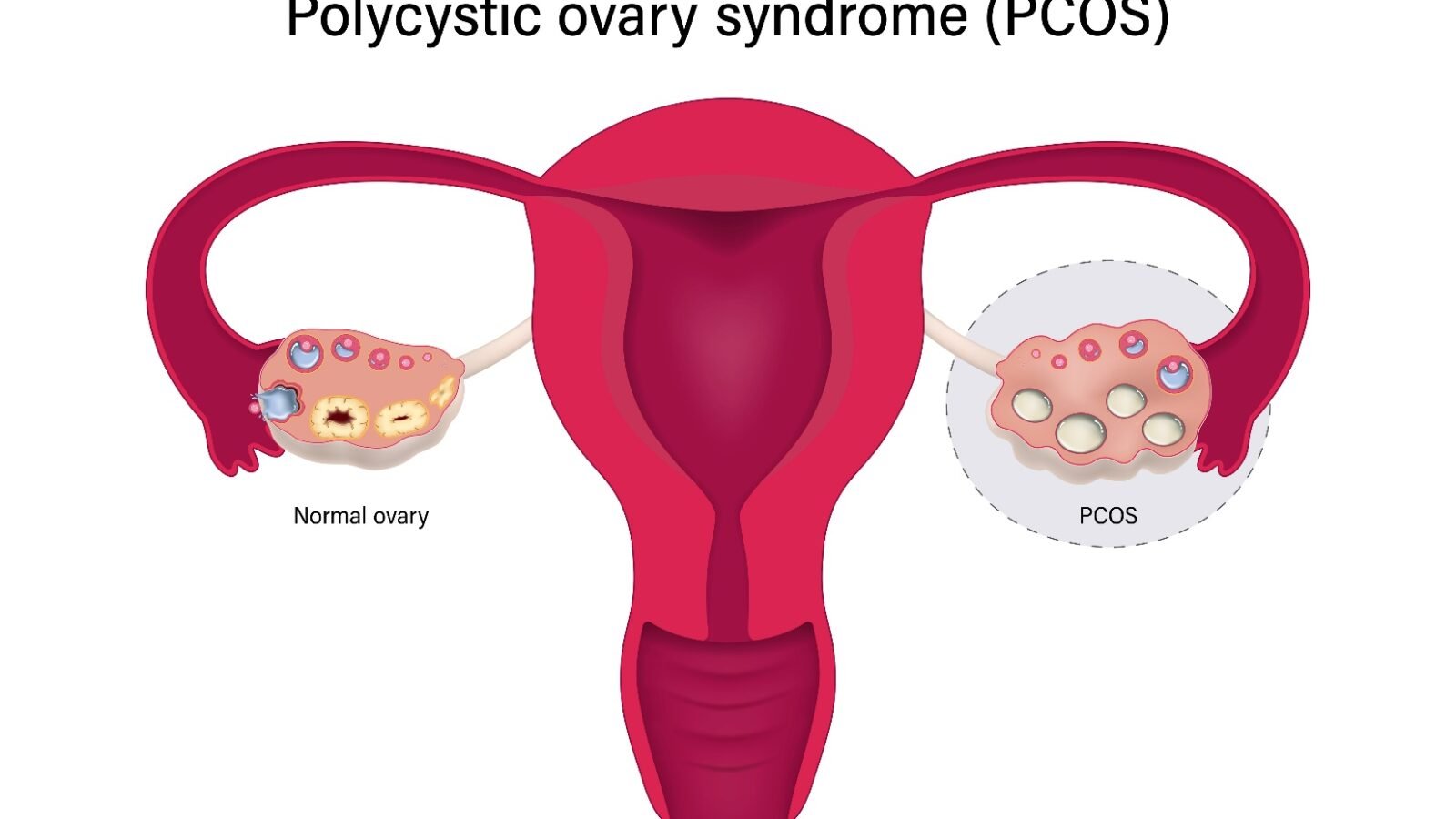
Her ultrasound eventually showed multiple ovarian cysts, and hormone tests confirmed PCOS.
According to Nutritionist Uwaigbe B.I.,
“If Mrs. J had received hormonal evaluation and nutritional counseling earlier, her symptoms would have been easier to manage. Early care helps prevent metabolic complications and supports long-term reproductive health.”
Why Early Diagnosis Makes a Lifelong Difference
Experts agree that intervening during the teenage years can dramatically transform outcomes. Early screening helps:
– Stabilize menstrual cycles
– Protect hormonal development
– Prevent insulin resistance
– Lower long-term diabetes risk
– Improve skin and hair symptoms
– Support emotional stability and confidence
Dr. Shamammadov emphasizes:
“The most effective diagnosis combines clinical symptoms, hormone tests, and ultrasound, but must be interpreted carefully in teens to avoid misdiagnosis.”
Uwaigbe B.I. adds another layer:
“Teenagers with PCOS often have nutritional deficiencies and poor eating patterns. Early diet correction, more fiber, fewer refined carbs, and better meal timing can change the entire trajectory of the condition.”
Supporting Teen Girls: What Families and Schools Can Do
Creating a supportive environment matters as much as the medical treatment. Teenagers with PCOS benefit when:
– Parents listen instead of dismissing symptoms
– Schools provide understanding on low-energy days
– Healthy eating habits are encouraged
– Sleep routines are stabilized
– Teens are not shamed for weight fluctuations
– Emotional support is prioritised
Small nutritional adjustments, such as balanced meals, reduced refined sugars, regular movement, and proper sleep, can make symptoms far more manageable.
A Call for Early Awareness
PCOS begins far earlier than most people realize, and teenage girls often suffer silently, confusing their symptoms with “normal growing up.” The sooner PCOS is recognized, the better the physical, emotional, and reproductive outcomes later in life.
As Dr. Shamammadov concludes,
“Understanding PCOS early helps teenagers take control of their bodies rather than feeling controlled by their hormones.”
Nutritionist Uwaigbe B.I. reinforces this: “Early guidance gives girls confidence and prevents progression into severe metabolic complications.”
PCOS is not just an adult disorder. It often begins in adolescence. With early awareness, compassionate support, and proper medical and nutritional guidance, teen girls can grow into healthy adults with confidence and balance.