Experts urge media to embrace innovation for greater public health impact

By Ojoma Akor
ABUJA — Experts have called for greater adoption of emerging technologies and stronger organizational systems to help media and public health institutions deliver more effective, credible, and sustainable health interventions.
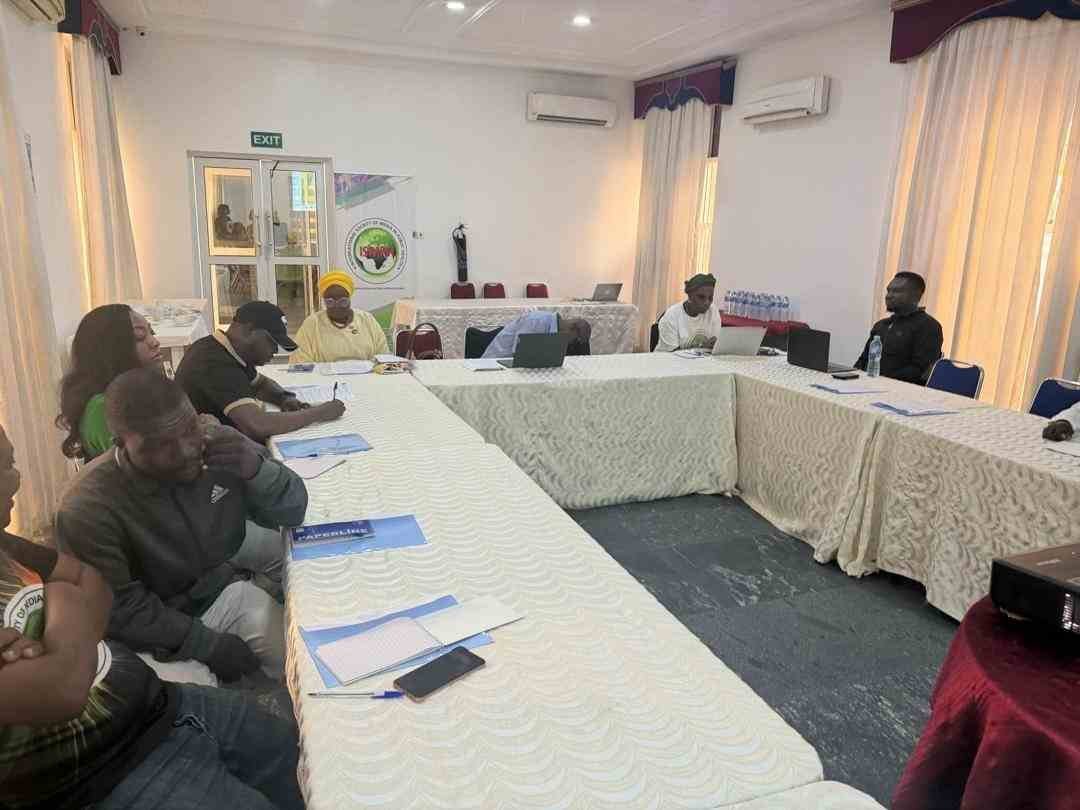
They made the call during the International Society of Media in Public Health (ISMPH) one-day strategic staff retreat in Abuja, Nigeria.
Professor Imran Morhason-Bello, in his presentation titled “Emerging Innovations in Public Health: Opportunities & the Evolving Role of Media,” said rapid advances in artificial intelligence, digital health, surveillance, diagnostics and other technologies were reshaping population health and changing the responsibilities of the media.
He identified 10 major public-health innovation trends, including AI-enabled public-health intelligence, interoperable digital infrastructure, telehealth and hybrid care, wearables and remote monitoring, and genomic and integrated surveillance.
Others are One Health and pandemic intelligence, rapid point-of-care diagnostics, next-generation vaccine platforms, climate-resilient health systems and community-led inclusive innovation.
Morhason-Bello, a professor at the University of Ibadan and an expert involved in cervical cancer elimination and research, said the emerging technologies offered significant opportunities but also required responsible communication to ensure that innovation translated into trusted and equitable public-health action.
‘Media must do more than report innovation’
Morhason-Bello highlighted that media is not an afterthought but part of the implementation pathway.
He said, “Innovation succeeds only when communities understand and trust it.”
He said the media had four major responsibilities across the innovation cycle: interpreting evidence, engaging communities, verifying claims, and demanding accountability.
According to him, journalists should translate scientific evidence, uncertainty, and limitations into information the public can understand; listen to communities and represent their priorities; verify claims, sources, conflicts, and emerging rumors; and scrutinize issues of equity, safety, cost, and real-world performance.
He also urged the media to strengthen community engagement and social listening, saying journalists could help identify rumors, fears, misinformation, and unmet information needs while investigating claims about effectiveness, safety, cost, procurement, and equity.
He said media reporting should also support behavior change, knowledge translation and emergency warnings by promoting protective health practices, explaining research through interviews, infographics, podcasts and local-language programming, and rapidly communicating alerts during outbreaks and environmental emergencies.
He said health communication should be measured not only by audience reach, but also by understanding, trust, and protective behavior.
The professor also highlighted social listening as an important tool for both public health practitioners and communicators.
He also explained that effective social listening should involve listening to community concerns, collecting digital and community feedback, analyzing themes and information gaps, co-designing and adapting interventions with communities, and responding while tracking trust, access, uptake, and outcomes.
He said community evidence could help public health teams design more relevant innovations, respond to misinformation and improve interventions over time.
The presentation also cautioned that innovation reporting could cause harm when ethical safeguards were weak, citing sensational headlines, premature claims, false balance, stigma, privacy breaches, AI-generated misinformation, algorithmic bias, digital exclusion and commercial conflicts as potential risks.
It therefore urged journalists to protect dignity and data, disclose uncertainty and avoid hype.
“Media programs can help an innovation move from expert discussion to public understanding, policy attention and wider adoption,” he added.
He also called for partnerships among the media, fact-checkers, public health agencies, and data and AI partners, citing the Africa Infodemic Response Alliance as an example of how collaboration can help track narratives, verify claims, and produce locally relevant responses.
Strong systems critical to organizational effectiveness
Dr Gafar Alwode, Managing Partner at Development Governance International Consult (DGI Consult), whom the program director represented, Kafayat Alawode, said organizations could not achieve sustainable results simply by having competent individuals or adequate financial resources.
She said effective organizations require functional systems, clear institutional structures, effective leadership, appropriate controls, skilled human resources, reliable information, and a culture of accountability and teamwork.
According to her, organizational systems should reinforce one another across governance and accountability, human resources and performance management, financial controls, documentation and reporting, and communication and teamwork.
She stressed that these systems should not operate in isolation because integrating them creates institutions that are transparent, responsive, efficient, and results-oriented.
Leadership must translate vision into results.
Alawode defined leadership as the ability to positively influence individuals, teams, and institutions towards a shared vision and desired results, stressing that leadership should not be confused with position or title.
She identified six core leadership competencies: strategic thinking and visioning, mobilizing and aligning people, motivating and inspiring others, problem-solving and critical thinking, adaptive or change management, and accountability and results orientation.
She also called for clear strategic plans, implementation roadmaps, and monitoring and evaluation frameworks to translate organizational vision into action.
On governance, she stressed clear roles and responsibilities, appropriate policies and procedures, defined reporting lines, transparent decision-making, and internal control mechanisms.
She also emphasized sound financial controls, warning that weak financial management could undermine an organization’s credibility and expose it to financial and reputational risks.
She recommended clear policies covering budgeting, procurement, expenditure authorization, cash and asset management, reporting and auditing, segregation of duties, and regular budget reviews.
On human resources, she called for systematic workforce planning, competency-based recruitment, clear job descriptions, continuous capacity development and performance management.
She stressed that staff development should respond to identified capacity gaps rather than rely on ad hoc training opportunities, and that coaching, mentoring, peer learning, and supportive supervision should form part of continuous performance management.
Alawode also proposed a series of actions to strengthen organizational systems, including clarifying governance and accountability, strengthening policies and standard operating procedures, establishing performance management systems, conducting regular capacity assessments, strengthening financial controls, and improving documentation and records management.
Clear governance, competent personnel, effective performance management, sound financial controls, reliable documentation and reporting, and strong communication and teamwork, she said, provide the foundation for an organization that can consistently deliver on its mandate.
Dr. Ishak Lawal, Consultant Gynecologist and Founder of End Cervical Cancer Nigeria Initiative, said the media has an important role to play in Strengthening Public Awareness and Advocacy on Non-Communicable Diseases (NCDs).
He said the media’s role in shaping the narrative includes dedicated verification, pre-bunking, amplifying experts’ voices, and partnering with local authorities.