Nigeria Unveils N70bn Oral Health Plan, Targets Elimination of Noma
By Ojoma Akor
The Federal Government has unveiled a five-year National Oral Health Strategic Plan estimated to cost N70 billion.
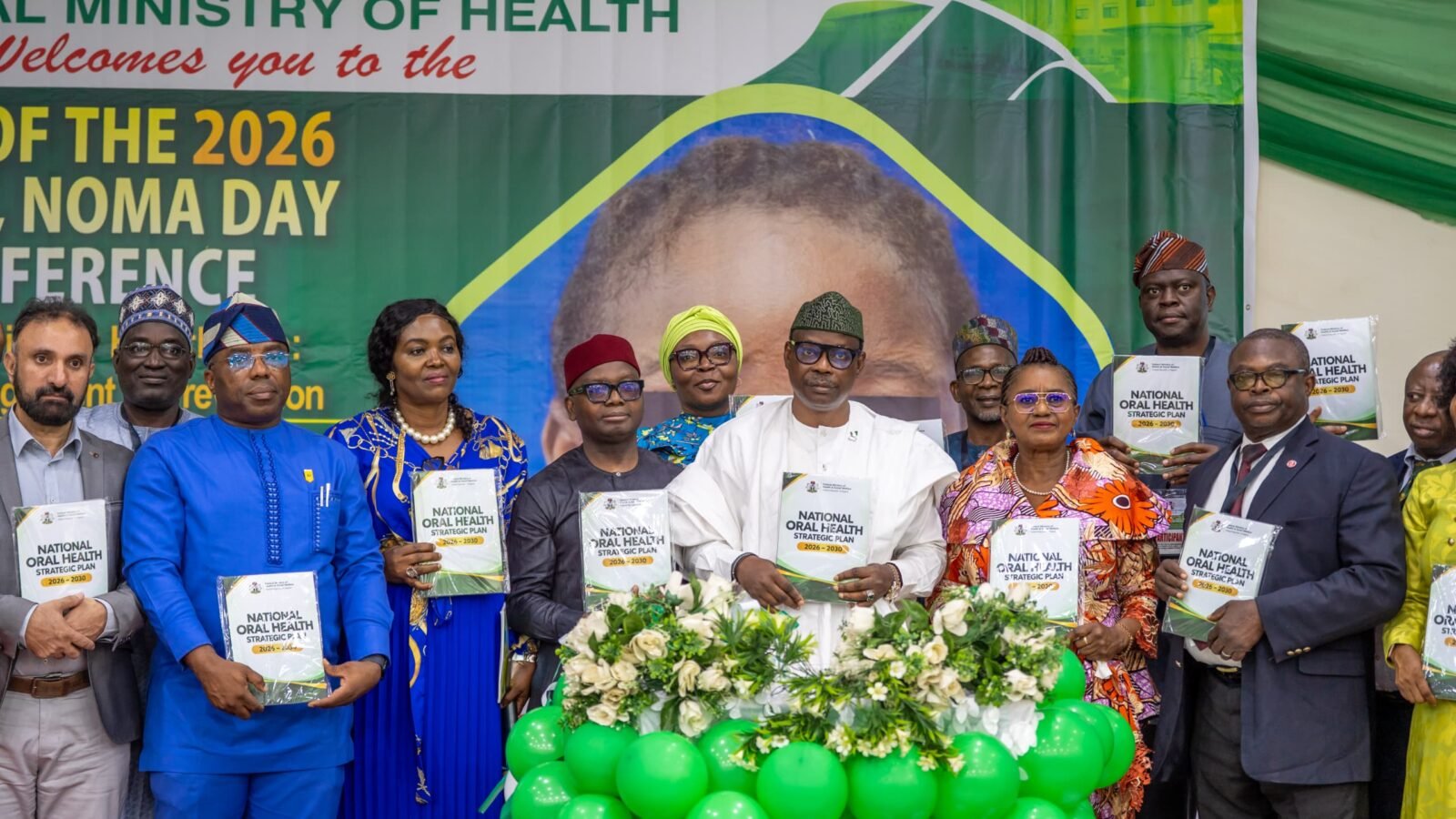
The Minister of State for Health and Social Welfare, Dr Iziaq Adekunle Salako, announced this on Monday in Abuja during the commemoration of the 2026 National Noma Day and National Oral Health Day, where he officially launched the National Oral Health Strategic Plan 2026–2030.
Noma is a rapidly progressing gangrenous infection that destroys the tissues of the mouth and face, predominantly affecting malnourished and immunocompromised children. Without prompt treatment, it can cause severe facial disfigurement, disability, and death.
The World Health Organization recognized the disease as a Neglected Tropical Disease in 2023, increasing global attention to the disease and the need for coordinated prevention, treatment, and rehabilitation efforts.
Salako said the plan aims to improve access to oral healthcare, strengthen early detection of Noma, and reduce the burden of preventable oral diseases across Nigeria.
He said the plan was designed to address longstanding gaps in Nigeria’s oral healthcare system and integrate oral health services into primary healthcare delivery as part of the country’s drive towards Universal Health Coverage.
He also said Nigeria continued to carry one of the highest burdens of Noma globally, particularly in the North-West and North-East, describing the disease as a preventable condition that should have no place in the 21st century.
According to the minister, the disease often begins as a simple gum infection but can progress within days, underscoring the importance of early detection and treatment.
He disclosed that more than 80 percent of Nigerians had never visited a dentist, while two out of every three children lived with untreated dental caries.
He also said Nigeria’s dentist-to-population ratio stood at approximately one dentist to 38,000 people, far below the World Health Organization’s recommended ratio of one dentist to 7,500 people.
Salako noted that most Nigerians continued to pay out-of-pocket for oral healthcare, with many seeking treatment only when pain or serious complications developed.
He said the new strategic plan would prioritize preventive care, health promotion, and integrating oral health into existing health programs, including nutrition, maternal and child health, and non-communicable disease interventions.
Other priorities include improving access to fluoride toothpaste, introducing school-based oral health programs, promoting sugar reduction, strengthening primary healthcare infrastructure and ensuring the equitable distribution of oral health professionals.
The plan also seeks to improve referral systems and expand access to oral healthcare services across Nigeria’s 774 local government areas.
To strengthen the response to Noma, Salako said the Federal Ministry of Health had integrated Noma surveillance into the Integrated Disease Surveillance and Response system and was working to equip primary healthcare facilities to identify and refer suspected cases at the earliest stages.
He added that the ministry had trained frontline healthcare workers, traditional healers, and traditional birth attendants to identify cases early.
He further disclosed that the Federal Executive Council had approved the National Center for Oral Health Establishment Bill 2026 and forwarded it to the National Assembly for consideration.
Salako called on state and local governments to domesticate and implement the strategic plan, while urging development partners and health professionals to support its implementation.
MSF reports over 1,700 reconstructive surgeries
Also speaking, the Country Representative of Médecins Sans Frontières (MSF), Dr Aldikhari Ahmed, called for stronger community-based surveillance, early detection and improved referral systems to prevent severe complications and deaths from Noma.
Ahmed said MSF’s collaboration with the Federal Ministry of Health and the Sokoto State Ministry of Health at the Noma Children’s Hospital had provided comprehensive care for affected children since 2014.
He said the partnership has facilitated more than 1,759 major reconstructive surgeries for 1,174 patients through 35 surgical missions over the past decade.
In 2026 alone, he said, 114 surgeries were performed on 96 patients.
According to him, the partnership has also strengthened local surgical capacity, with international specialists training 28 Nigerian surgeons and 14 anesthetists.
Ahmed welcomed progress towards integrating Noma into primary healthcare guidelines and including it in the Surveillance Outbreak Response Management and Analysis System (SORMAS), describing these as important steps towards improving case identification, reporting and referral.
However, he cautioned that including Noma in surveillance systems must be supported by effective implementation, adequate training, consistent reporting, reliable data management, and sustained funding.
He urged government and development partners to invest in surveillance, referral systems and comprehensive care, including nutritional support, mental health services and rehabilitation for survivors.
WHO calls for stronger surveillance, community awareness
The World Health Organization (WHO) Country Representative, Dr Pavel Ursu, said tackling Noma requires sustained public awareness, health worker training, effective referral pathways, and stronger disease surveillance.
Ursu explained that early antibiotic treatment, improved nutrition and proper oral hygiene could halt the progression of the disease and prevent permanent disability when cases were identified promptly.
He described Noma as more than an oral health challenge, noting that it reflected deeper inequalities in nutrition, access to healthcare and social protection.
He urged governments to strengthen surveillance systems, equip healthcare workers and caregivers to recognize early warning signs, improve referrals and ensure survivors had access to rehabilitation and psychosocial support.
National Assembly pledges stronger oversight
Meanwhile, the Chairperson of the relevant National Assembly committee, Senator Ipalibo Harry-Banigo, reaffirmed the legislature’s commitment to strengthening primary healthcare and ensuring oral health becomes an integral part of routine healthcare delivery.
She disclosed that funding for the Basic Health Care Provision Fund (BHCPF) had been increased from one to two per cent to strengthen frontline health services and community-level interventions.
Harry-Banigo pledged legislative oversight to ensure that appropriated funds translated into tangible healthcare services for affected children and families across the six geopolitical zones.
Stakeholders call for whole-of-society approach.
In her keynote address, Dr Adebimpe Adebiyi said eliminating Noma required a whole-of-society approach involving government institutions, healthcare professionals, civil society organizations and international development partners.
She emphasized the need to move beyond sympathy and isolated clinical interventions toward sustainable systems that prioritize prevention, early detection, and community awareness.
Adebiyi also paid tribute to the late Mama Ute Winkler-Stumpf, founder of Hilfsaktion Noma, for her contributions to treating and rehabilitating children affected by the disease.
She said the organization worked closely with WHO and Nigerian authorities to establish critical treatment infrastructure, including the Noma Center in Abuja, through which many children benefited from free reconstructive surgeries.
She urged stakeholders to sustain the humanitarian’s legacy by strengthening systems that protect vulnerable children and ensure access to timely and comprehensive treatment.