Nigeria: Stakeholders Develop Handbook to Expand State Health Insurance Coverage
By Ojoma Akor
The World Health Organization (WHO), the National Health Insurance Authority (NHIA), and health policy experts are developing a practical framework to help Nigerian states expand health insurance coverage for vulnerable populations and integrate HIV, tuberculosis (TB), and malaria services into existing social health insurance schemes.
The initiative, supported under the Global Fund’s Seventh Grant Cycle (GC7), aims to strengthen state health insurance systems, improve access to essential healthcare services, and reduce dependence on donor-funded disease-specific interventions.
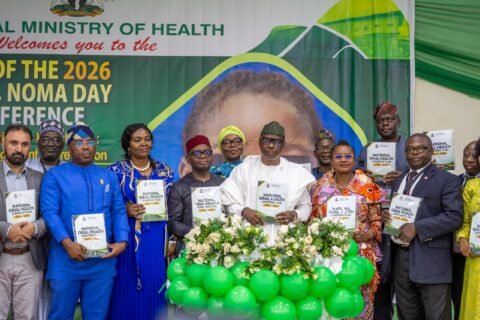
At the center of the initiative is the Learning Agenda Handbook on the Pilot of Vulnerable Populations Coverage under Social Health Insurance Schemes and the Full Integration of AIDS, Tuberculosis and Malaria (ATM) Services into Health Insurance Schemes*, developed with technical support from WHO.
WHO engaged the Health Policy Research Group (HPRG) of the University of Nigeria, Enugu Campus, to facilitate the development of the handbook, which is expected to provide practical guidance for states implementing and expanding the health insurance integration model.
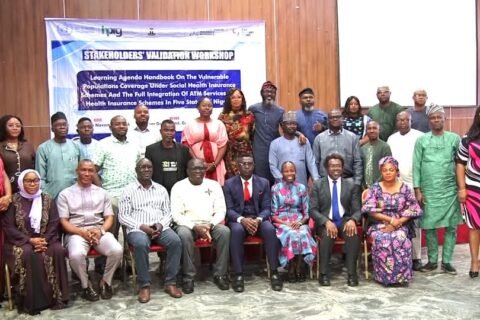
The draft handbook and accompanying implementation roadmaps were reviewed at a two-day validation workshop held on November 4 and 5, 2026, in Abuja, bringing together representatives of state governments, health insurance agencies, development partners and other stakeholders.
The validation process followed a co-creation workshop held on September 22 and 23, 2026, during which stakeholders developed priority learning questions and agreed on the handbook’s structure and key areas of focus.
Speaking at the validation workshop, Dr Mary Brantuo, Team Lead, Strategic Health Policy and Planning at WHO, said the initiative was critical to addressing Nigeria’s persistent challenge of low health insurance coverage and advancing universal health coverage.
She explained that the pilot provides an opportunity to integrate vulnerable populations, particularly people affected by HIV, TB and malaria, into existing state social health insurance schemes, using support from the Global Fund.
According to her, documenting the experiences of participating states would provide evidence and practical guidance for other states seeking to replicate the approach.
Brantuo said WHO was supporting the initiative as part of its broader technical assistance to the Nigerian government in achieving universal health coverage.
She noted that although the program focuses on three major diseases, the broader objective is to use the intervention as an entry point to expand insurance coverage to the wider population.
“Our key message is that each of us has to be insured because we do not know when we fall ill. We cannot wait until we fall ill before looking for money or selling our belongings to access healthcare,” she said.
She urged Nigerians to enroll in their respective state social health insurance schemes, explaining that prepayment through health insurance would reduce financial barriers and ensure access to healthcare when needed.
Brantuo also identified cultural beliefs, misconceptions and other community-specific challenges as potential barriers to insurance enrolment and utilization.
She said the learning agenda would help states understand these challenges and develop context-specific approaches to addressing them.
Also speaking, Dr Charles Ohuakanwa, Head of Planning, Research and Statistics at the NHIA, said the authority was central to implementing the Global Fund-supported program and was working with partners to strengthen the model ahead of its expansion to additional states.
He explained that the pilot was designed to improve health insurance coverage among vulnerable populations, particularly people living with HIV and TB.
Ohuakanwa said the handbook would document implementation experiences and provide a foundation for bringing more states into the program in subsequent phases.
He stressed that the NHIA’s broader objective remained ensuring that every Nigerian had access to affordable and equitable healthcare without suffering financial hardship.
On beneficiary eligibility, he explained that people diagnosed with TB and HIV were considered vulnerable groups under the program. At the same time, primary healthcare facilities could also serve as entry points for identifying other vulnerable populations.

Meanwhile, Prof. Obinna Onwujekwe, Director of the Health Policy Research Group at the University of Nigeria, said integrating disease-specific interventions into existing health insurance structures would reduce inefficiencies, improve resource utilization and strengthen the sustainability of healthcare financing.
Onwujekwe, who coordinated the handbook development process, explained that the document was developed through a participatory process involving states rather than being produced solely by technical experts.
He said an assessment informed the handbook’s development, while consultations with state representatives helped identify priority learning questions and practical implementation challenges.
According to him, the validation workshop was designed to help stakeholders identify gaps in the draft, agree on implementation activities, and determine the capacity-building support states need to implement the recommendations.
He emphasized that integrating ATM services into existing insurance structures would help governments reach more vulnerable populations while reducing dependence on external donor funding.
“Integration is the way to go because when we integrate into what is existing, we can bring more people in and cover a lot of vulnerable people without needing to depend on donor funding,” he said.
Providing an account of implementation at the state level, Dr Augustine Ezeka, Executive Secretary of the Anambra State Health Insurance Agency, said the Global Fund partnership had significantly improved access to healthcare for people living with HIV and TB in the state.
He said that over approximately 24 months of partnership, thousands of beneficiaries had accessed free medical services through the program.
Ezeka explained that people confirmed to be living with HIV or diagnosed with TB and registered under the state health insurance agency could access treatment for various illnesses at designated healthcare facilities without paying out of pocket.
He described the handbook as an important tool for preparing state health insurance agencies for the gradual withdrawal of international development partners.
According to him, the objective is to strengthen state ownership and develop locally driven financing arrangements that will ensure the continuity of healthcare services for vulnerable populations beyond the lifespan of donor-supported interventions.
He said the program must remain sustainable so beneficiaries can continue to receive comprehensive healthcare regardless of whether international partners remain involved.
The handbook and implementation roadmaps are expected to guide states in strengthening institutional capacity, identifying implementation gaps, and developing strategies to integrate ATM services into existing health insurance laws and structures.
Stakeholders said the initiative’s success would depend on sustained political commitment, adequate domestic financing, stronger state-level implementation capacity, and effective coordination among government agencies and development partners.
They stressed that the long-term ambition should extend beyond covering people affected by the three diseases to building stronger state health insurance systems that can protect more Nigerians from the financial burden of accessing healthcare.